
Lake Manyara, Tarangire, Ngorongoro & Serengeti
Expert-Led Birdwatching & Wildlife Safari With The Woven Experience
- Information
- Tour Plan
- Location
- Gallery
- Reviews
- Additional Info
- Similar Tours
What's included
- Services not specifically stated in the itinerary
- Unlimited bottled water
- Services not specifically stated in the itinerary
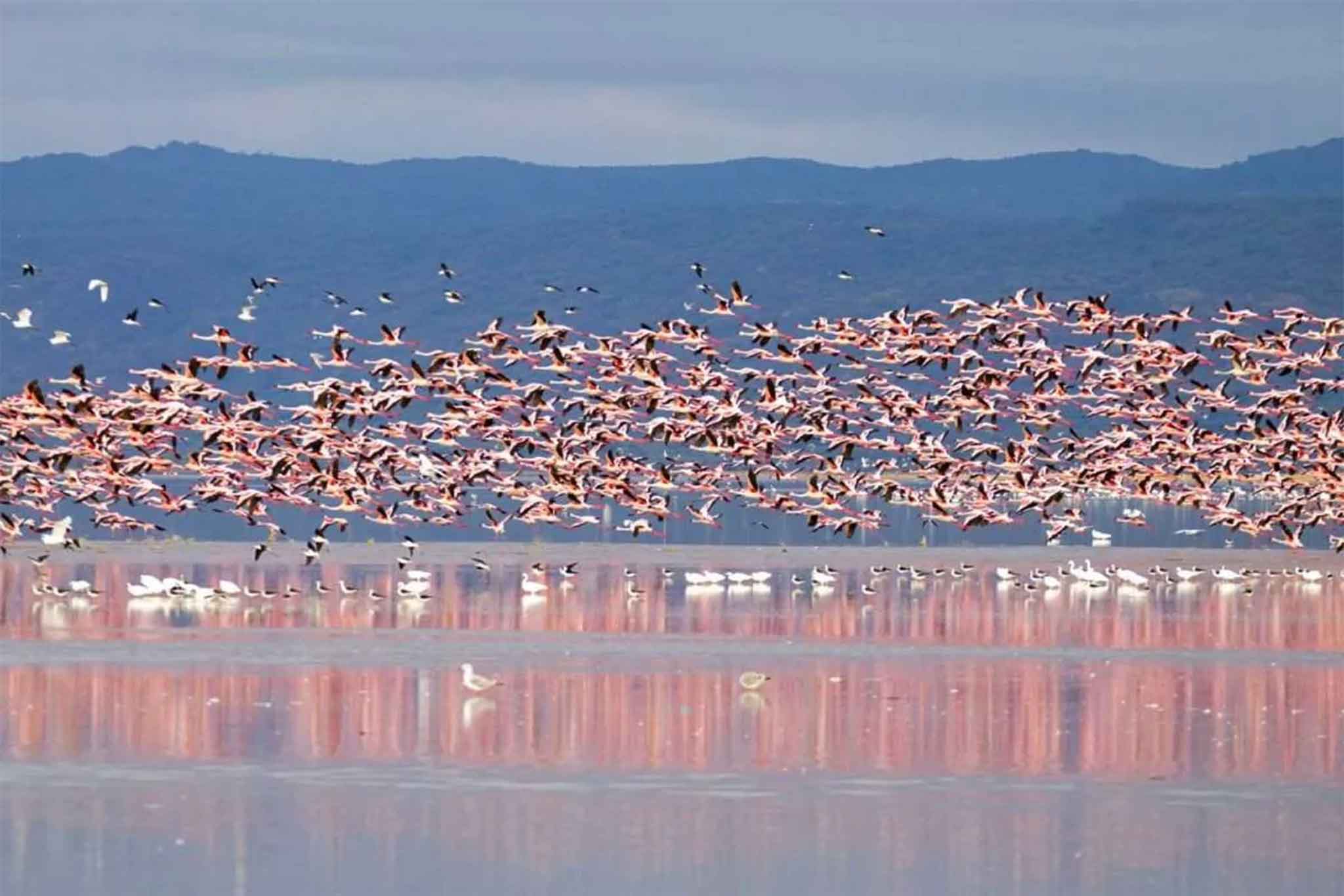
Flamingo Spectacle & Forest Jewels
Lake Manyara delivers Tanzania’s most reliable pink horizon when up to a million lesser flamingos carpet the soda lake from June to October. The groundwater forest explodes with colour: silvery-cheeked hornbills, palm-nut vultures, Narina trogons, and crowned eagles. African fish eagles call from every dead tree while thousands of yellow-billed storks and spoonbills wade the shallows. Tree-climbing lions add bonus mammal drama without distracting from the 400+ species checklist.
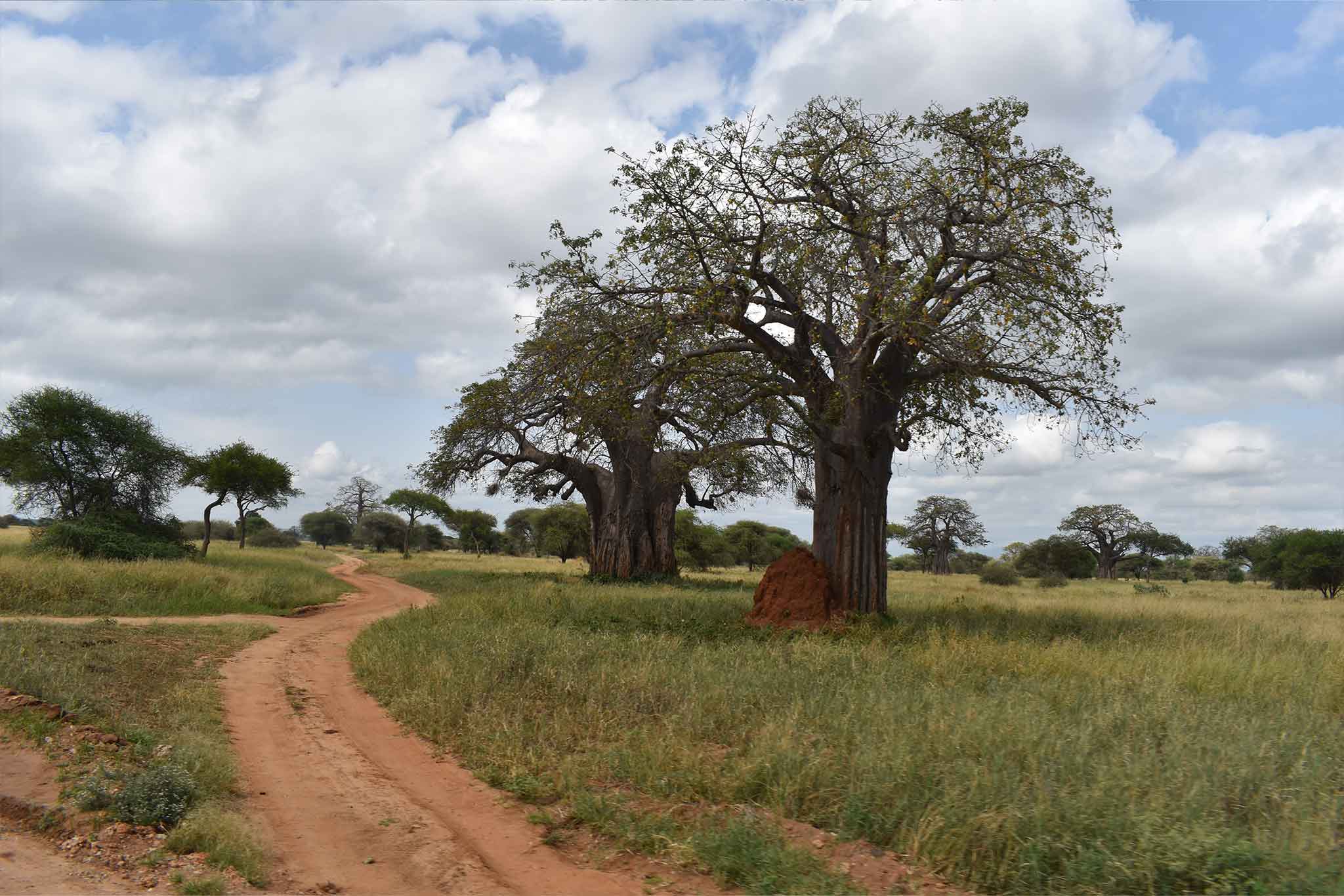
Dry-Country Endemics & Baobab Specials
Tarangire is Africa’s baobab capital and a hotspot for Tanzania’s rarest dry-country birds. Ashy starlings (endemic), yellow-collared lovebirds, red-and-yellow barbets, and vulturine guineafowl parade between ancient trunks. Massive ostrich herds strut the plains while white-headed and white-backed vultures circle elephant carcasses. Over 550 species recorded – the highest density outside wetlands – make this park a must for serious listers.
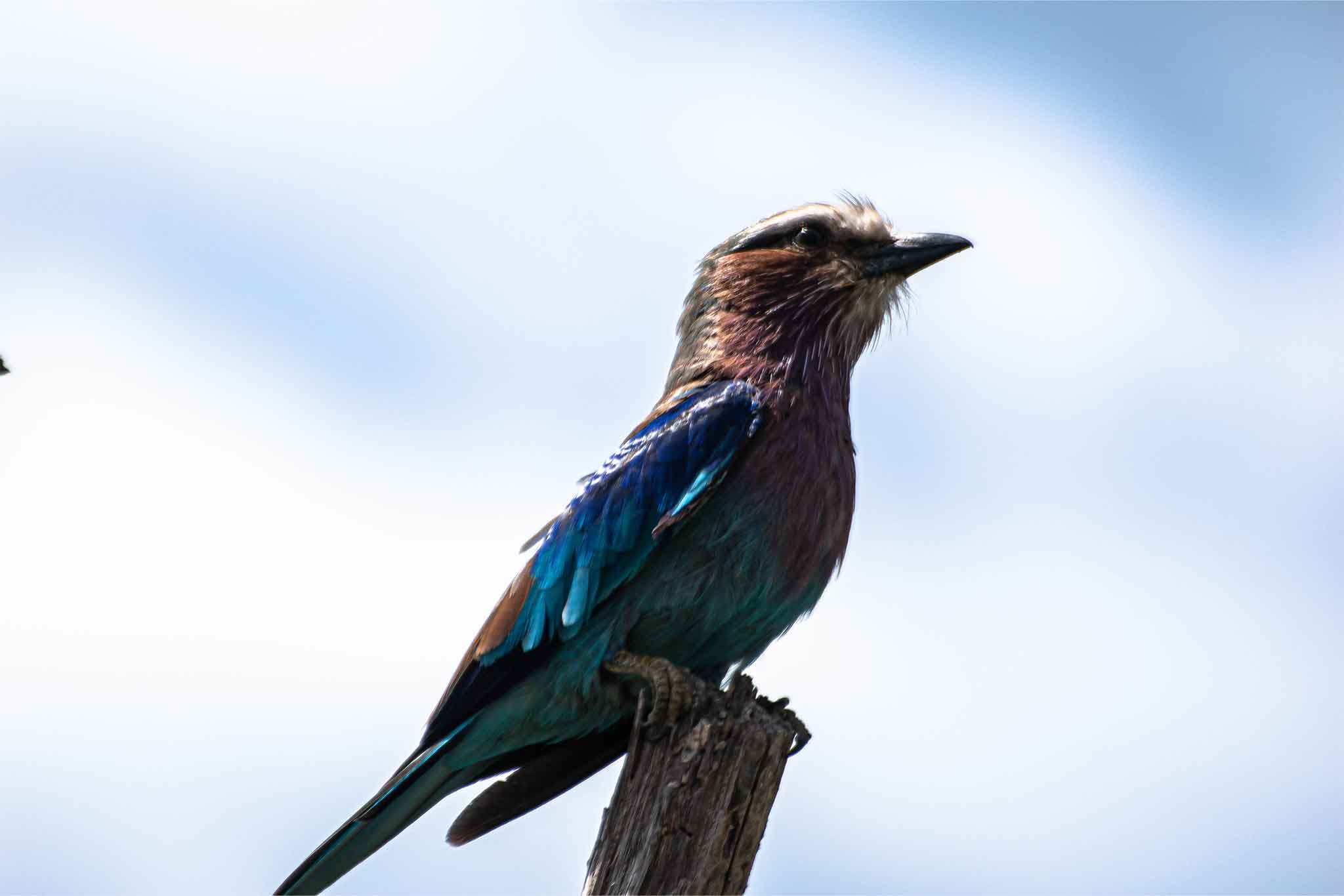
Rollers, Raptors & Kopje Classics,
The Seronera and Moru Kopjes sector offers classic open-country birding on the endless plains. Lilac-breasted and European rollers flash iridescent wings from every acacia. Secretary birds stalk like stilt-walkers while Kori bustards – the world’s heaviest flying bird – strut nearby. Rufous-tailed weavers build giant apartment nests, Fischer’s lovebirds squeak in pairs, and massive marabou stork and vulture gatherings clean migration kills. Grey-breasted spurfowl and Usambiro barbets add Serengeti-only specials.
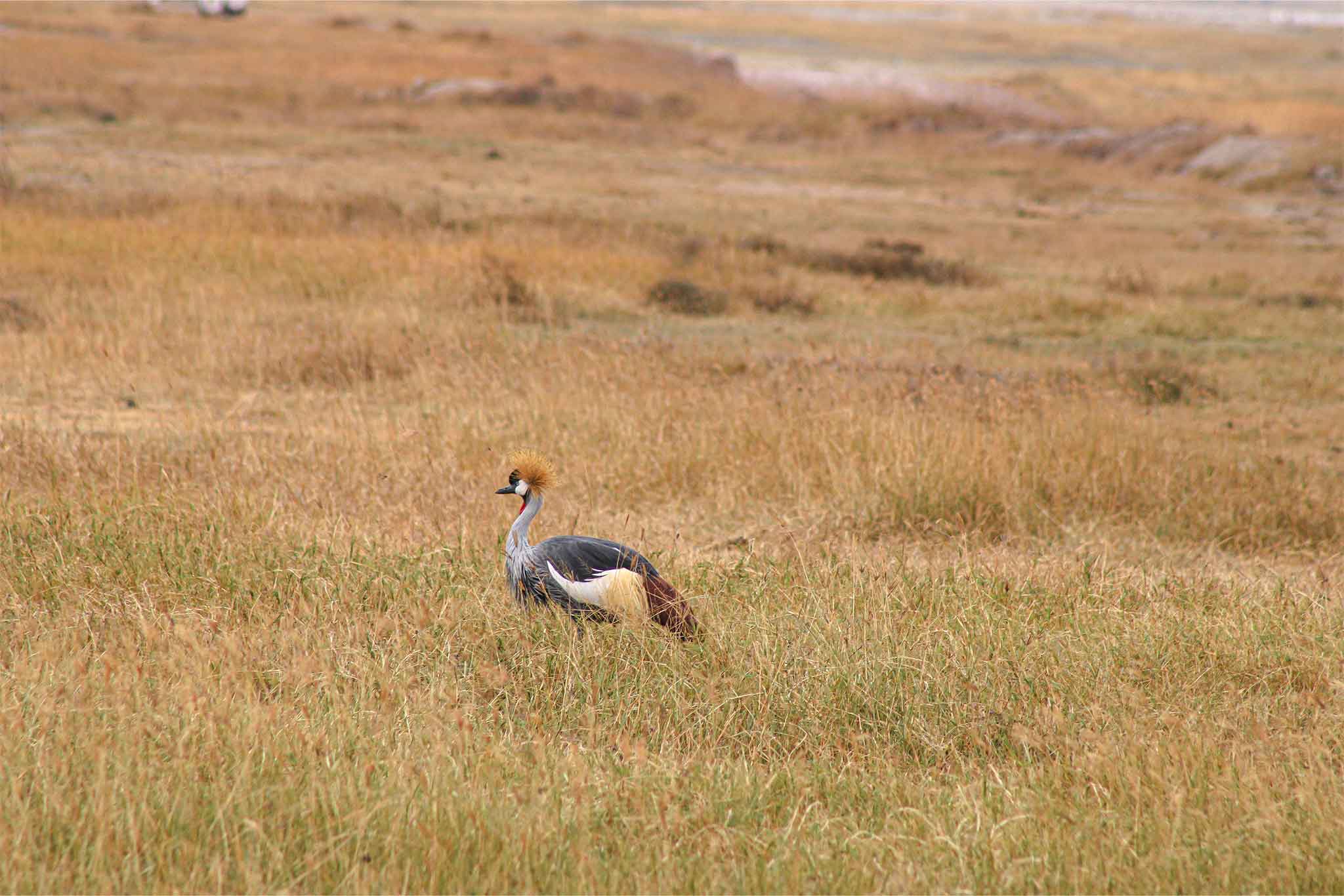
Highland Endemics & Wetland Waders
The crater floor combines soda-lake flamingos with highland grassland specials in one stunning bowl. Grey-crowned cranes dance on the Lerai lawns, lesser flamingos rim Lake Magadi pink, and Africa’s densest ostrich population roams the open plains. Hunter’s cisticola, Schalow’s wheatear, and anteater chats patrol the rim forests. Abdim’s storks arrive in thousands during the rains, while augur buzzards and Verreaux’s eagles soar overhead. Over 500 species possible in a single day inside this natural aviary.
- Day 1
- Day 2
- Day 3
- Day 4
- Day 5
- Day 6
Arusha to Tarangire – Into the Elephant Landscape
Your safari begins with a drive from Arusha to Tarangire National Park, a park renowned not only for elephants but also for its rich birdlife, particularly during the dry season.
As you enter the park, your guide shifts focus toward bird habitats along the Tarangire River and surrounding woodlands. The pace is intentionally slower, allowing time to observe species such as the lilac-breasted roller, hornbills, and various raptors circling above the savannah. Along the riverbanks, African fish eagles and kingfishers are frequently spotted, while large mammals provide a complementary backdrop to the birding experience.
By late afternoon, you transition to your lodge, reflecting on a diverse first day in the field.
Accommodation (Mid-Range Options):
- Tarangire Safari Lodge
- Sangaiwe Tented Lodge
Meal Plan: Lunch & Dinner
Lake Manyara – Flamingos, Forest Birds & Rift Valley Diversity
After breakfast, you continue to Lake Manyara National Park, one of Tanzania’s most important birding locations. The park’s habitats—from groundwater forest to open lake—support an exceptional concentration of bird species.
Your exploration begins in the forest, where the canopy shelters species such as turacos, hornbills, and flycatchers. As you move toward the lake, the scenery opens to reveal large flocks of flamingos, pelicans, and other water birds along the shoreline. The contrast between forest and lake ecosystems provides a full-spectrum birding experience within a single day.
In the afternoon, you ascend to Karatu, where the cooler highland environment offers a peaceful transition.
Accommodation (Mid-Range Options):
- Country Lodge Karatu
- Marera Valley Lodge
Meal Plan: Breakfast, Lunch & Dinner
Karatu to Serengeti – Grassland Birds & Open Plains
You depart early, traveling through the Ngorongoro highlands before descending into Serengeti National Park. As the landscape opens into vast plains, the focus shifts to grassland bird species uniquely adapted to this environment.
The Serengeti offers excellent opportunities to observe ground-dwelling birds such as the secretary bird, ostrich, and kori bustard. Raptors are also abundant, often seen scanning the plains or perched on acacia trees. Wildlife sightings continue throughout the journey, but the pace remains birding-focused, with frequent stops to observe and identify species.
By late afternoon, you arrive in the central Serengeti for an evening at camp.
Accommodation (Mid-Range Options):
- Serengeti Kati Kati Camp
- Into Wild Africa Tented Camp
Meal Plan: Breakfast, Lunch & Dinner
Full-Day Serengeti – Advanced Birding & Predator Interaction
Today is dedicated to a deeper exploration of the Serengeti’s birdlife. You depart early, when bird activity is at its peak, allowing for optimal observation of both resident and migratory species.
Your guide focuses on identifying calls, flight patterns, and habitat preferences, creating a more technical and rewarding birding experience. Raptors dominate the skies, while vultures and scavenger species often gather around predator activity, offering a unique intersection between birding and big game viewing.
The day unfolds naturally, with time spent observing behavior rather than rushing between sightings. A picnic lunch in the bush ensures continuous immersion in the environment.
Accommodation (Mid-Range Options):
- Serengeti Kati Kati Camp
- Into Wild Africa Tented Camp
Meal Plan: Breakfast, Lunch & Dinner
Serengeti to Ngorongoro – Highland & Forest Bird Species
After a final morning in the Serengeti, you travel toward the Ngorongoro Conservation Area. The shift in elevation introduces new habitats and bird species, particularly in forest and highland environments.
Along the crater rim, cooler temperatures and dense vegetation attract species such as sunbirds, weavers, and crowned cranes. The changing landscape provides a valuable contrast to the open plains of the Serengeti, enriching the overall birding experience.
You arrive at your lodge in the late afternoon, with panoramic views over the crater.
Accommodation (Mid-Range Options):
- Rhino Lodge
- Ngorongoro Farm House
Meal Plan: Breakfast, Lunch & Dinner
Ngorongoro Crater – Wetland Birds & Final Safari
An early descent into the Ngorongoro Crater offers a final opportunity to explore a dense and varied ecosystem. The crater floor includes wetlands, open grasslands, and forest patches, each supporting different bird species.
Around Lake Magadi, flamingos and other water birds gather, while cranes, storks, and herons are commonly seen in the surrounding area. The combination of birdlife and large mammals creates a well-rounded and visually dynamic safari experience.
After a final game drive and picnic lunch, you ascend the crater and return to Arusha.
Accommodation: Depends on your flight schedule.
Meal Plan: Breakfast & Lunch
More about Lake Manyara National Park Discover Lake Manyara National Park
More about Ngorongoro Conservation Area
More about Serengeti National Park Discover Serengeti National Park
More about Tarangire National Park Discover Tarangire National Park
More about this tour
Location Overview
This 6-day birding-focused loop explores four of Tanzania’s most diverse avian hotspots within the classic Northern Circuit – a UNESCO World Heritage landscape 120–200 km west of Arusha, the safari capital nestled at the foot of Mount Meru (1,400 m/4,600 ft). The route combines rift-valley lakes, baobab savannahs, endless Serengeti grasslands, and the world’s largest intact volcanic caldera, delivering over 550 recorded bird species in a single compact journey. From alkaline flamingo spectacles to endemic dry-country specials and highland forest jewels, this circuit offers year-round birding excellence with dramatic scenery as a backdrop.
Lake Manyara National Park (330 km²): 120 km west of Arusha. A narrow rift-valley jewel wedged between the pink soda waters of Lake Manyara (65% of the park) and the 600 m Gregory Rift escarpment. Groundwater forest, acacia woodland, and open lake shores host 400+ species, including thousands of lesser and greater flamingos (peaks Jun–Oct), African fish eagles, silvery-cheeked hornbills, and the rare grey-headed kingfisher.
Tarangire National Park (2,850 km²): 140 km southwest of Arusha. Rolling hills, seasonal Tarangire River, and Africa’s highest density of ancient baobabs create a dry-country paradise. Home to Tanzania’s largest elephant population and 550+ bird species, including endemic ashy starlings, yellow-collared lovebirds, red-and-yellow barbets, vulturine guineafowl, and massive ostrich flocks.
Serengeti National Park – Central/Seronera & Moru Kopjes sector (14,763 km² total): 200–250 km northwest of Arusha. The legendary endless plains and granite kopje islands of the central Serengeti form a critical year-round birding zone. Lilac-breasted rollers, rufous-tailed weavers, Fischer’s lovebirds, secretary birds, grey-breasted spurfowl, and huge marabou stork and vulture gatherings around migration kills dominate the landscape.
Ngorongoro Crater (260 km² floor): 180 km west of Arusha within the 8,300 km² Ngorongoro Conservation Area. A 600 m-deep, 19 km-wide intact caldera cradling soda lake Magadi, freshwater springs, fever-tree forests, and open grasslands. Year-round resident birds include grey-crowned cranes, lesser flamingos (peaks Jun–Oct), Kori bustards, anteater chats, and highland specials such as hunter’s cisticola and Schalow’s wheatear on the rim.
Geography & Access
Terrain: Rift-valley escarpments, soda and freshwater lakes, baobab savannah, acacia woodlands, short-grass plains, granite kopjes, and montane crater rim forest.
Altitude Range: 950–2,400 m (3,100–7,870 ft).
Travel Times (from Arusha, road only): Lake Manyara 1.5–2 hrs; Tarangire 2–2.5 hrs; Central Serengeti 4.5–5.5 hrs; Ngorongoro Crater 3–3.5 hrs.
Gateway: Kilimanjaro International Airport (JRO) → Arusha (45 min transfer).
Year-round access via private 4×4; dry-season (Jun–Oct) offers dust-free visibility and peak flamingo concentrations, while the green season (Nov–May) brings migrant Palearctic and intra-African species, breeding plumage, and dramatic storm-light photography.





There are no comments yet.