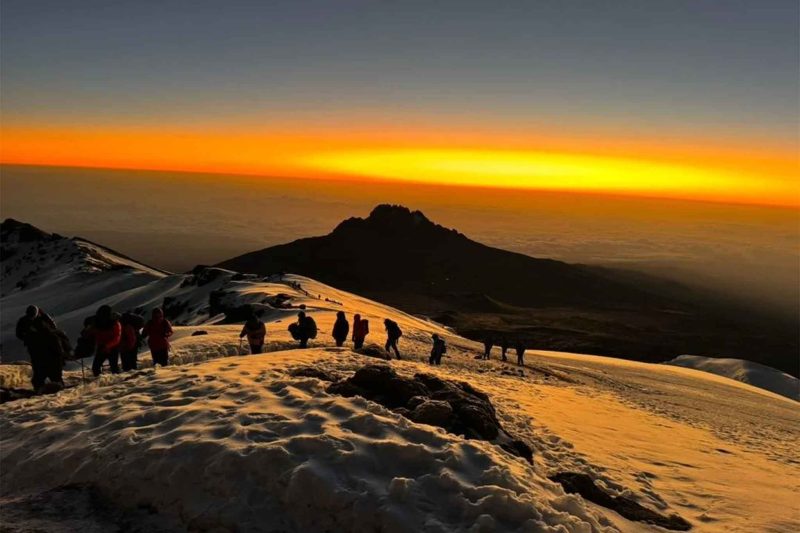
FIRST MINUTE
Price
$490 per person
Duration
1 Day
Destination
Ngorongoro Conservation Area
Travellers
1+

Ngorongoro Crater withThe Woven Experience

Ngorongoro Crater day trip private – the ultimate full-day immersion in Africa’s highest large-mammal concentration and only UNESCO World Heritage site where you descend 600 m into a volcanic bowl packed with 25,000+ animals.
  • Information
  • Tour Plan
  • Location
  • Gallery
  • Reviews
  • Additional Info
  • Similar Tours
Best Lake Manyara day trip from Arusha 2026–2027 | Private full-day game drives in Tanzania’s tree-climbing lion hotspot | Year-round departures

What's included

Destination
Ngorongoro Conservation Area Discover Ngorongoro Conservation Area
Departure Location
Arusha
Return Location
Arusha
Tour Start Date & Time
Everyday at 06:30
Price includes
  • Unlimited bottled water
Price does not include
  • Visa arrangements
Additional Prices
Maasai Boma Visit: $50

Spot the Big Five in One Single Day

Ngorongoro Crater is one of the only places on earth where you can reliably see all Big Five animals – lion, leopard, elephant, buffalo, and black rhino – in just one game drive, making this day trip the ultimate bucket-list safari experience from Arusha or Karatu.
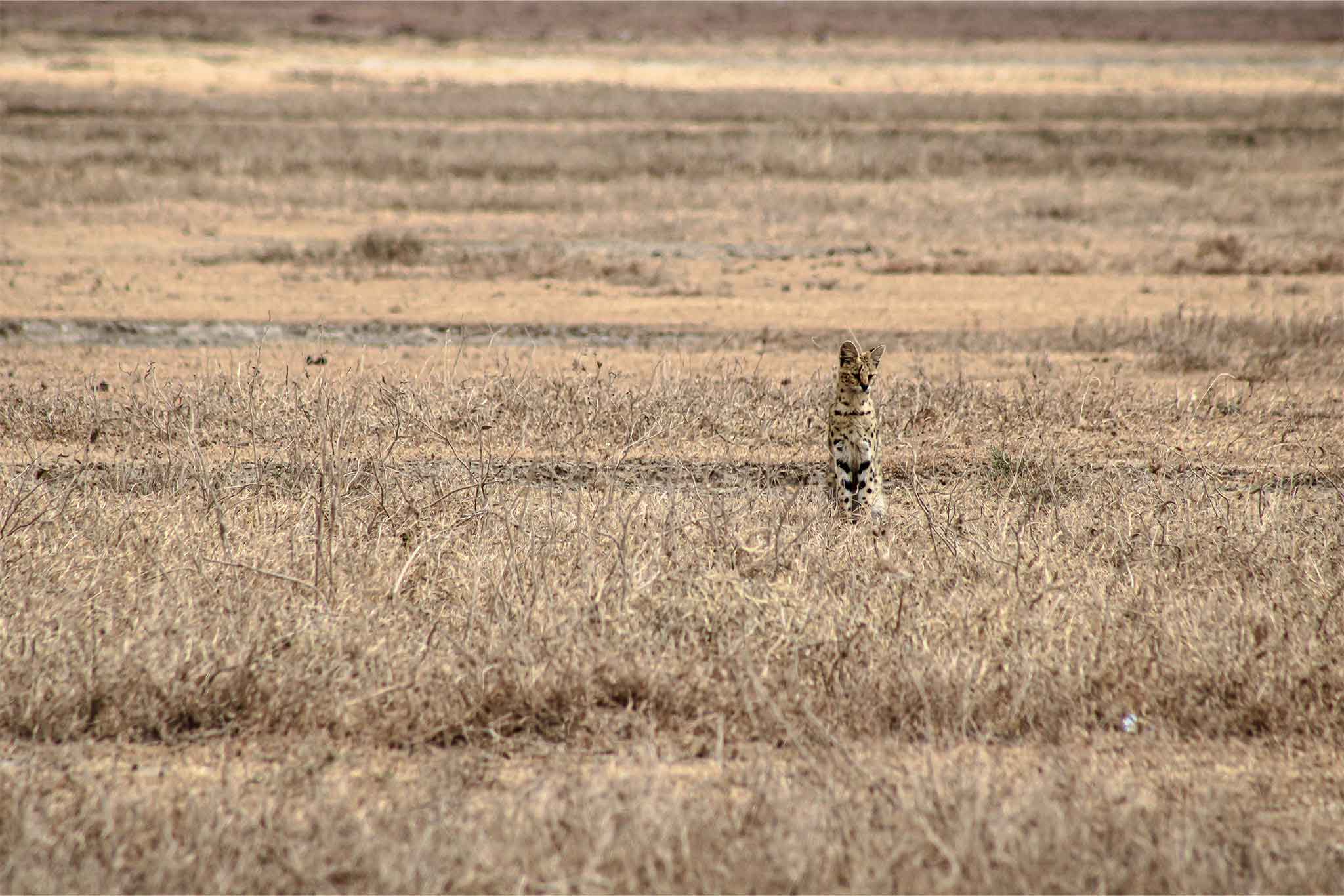
Highest Density of Predators in Africa

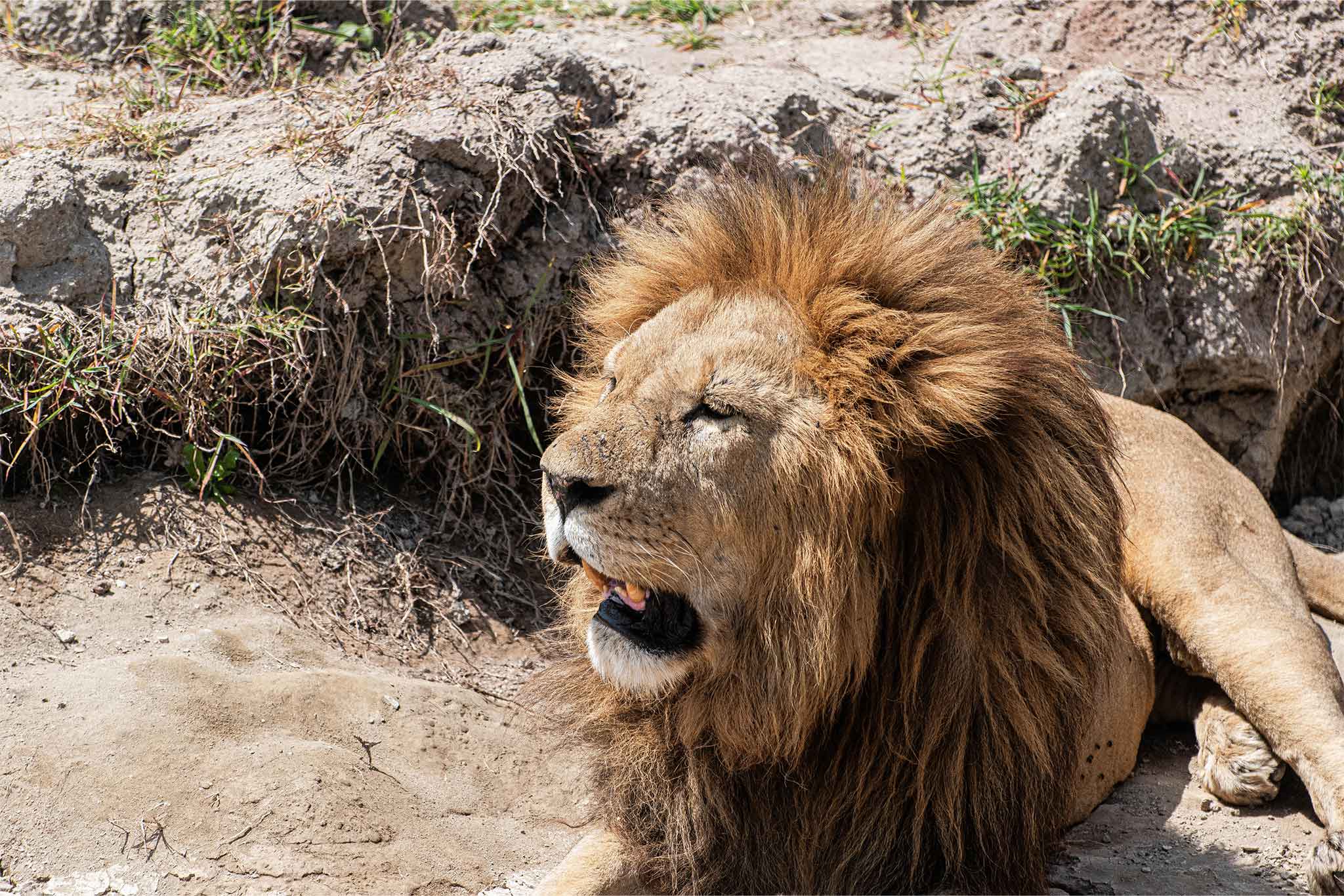
Home to one of the continent’s highest concentrations of large predators, the crater floor offers exceptional lion sightings and frequent hyena clan encounters against a dramatic volcanic backdrop.
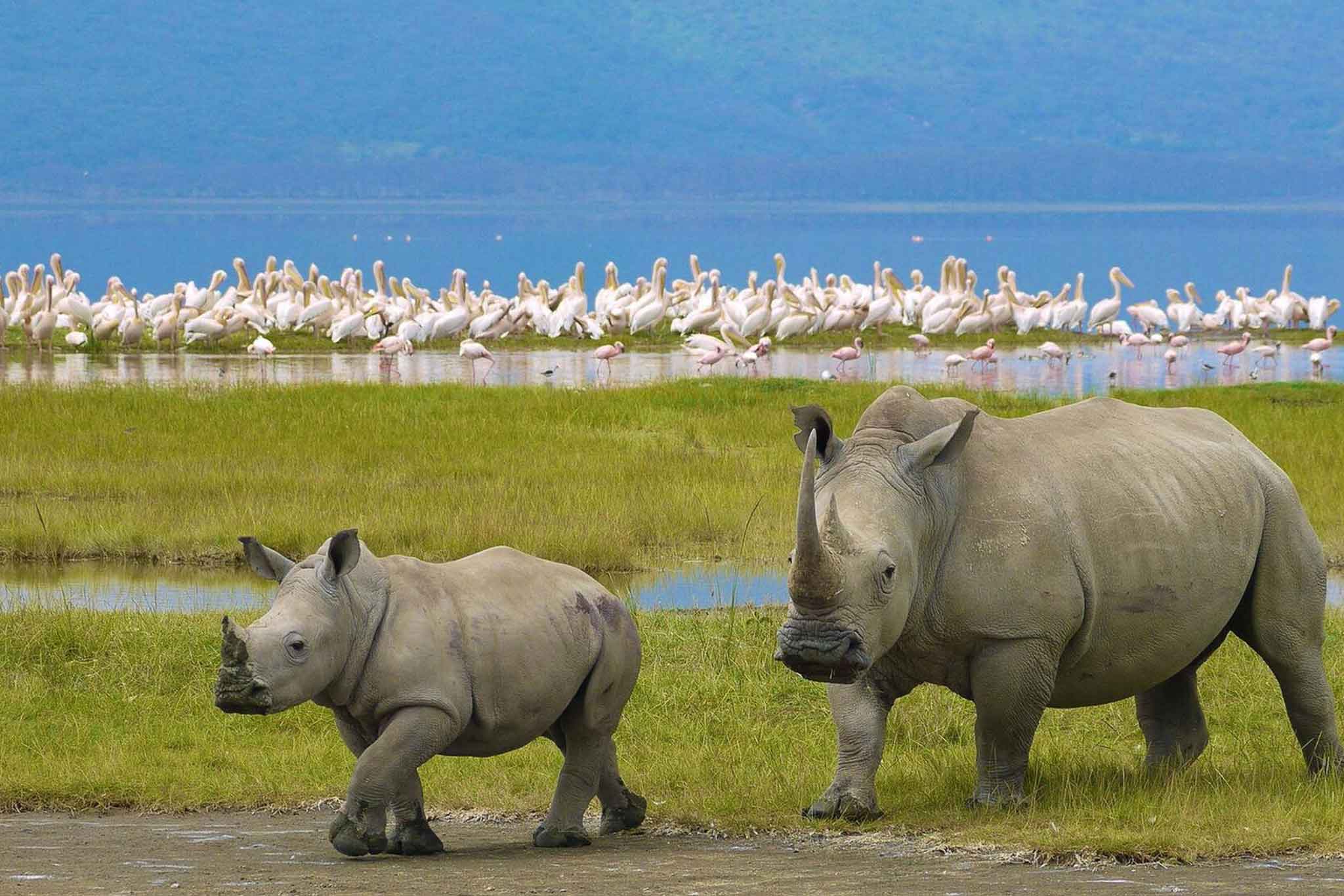
Rare Black Rhino Encounters

Ngorongoro Conservation Area protects one of Tanzania’s largest remaining populations of critically endangered black rhino, giving visitors a genuine chance to see these majestic animals in the wild during the day trip.
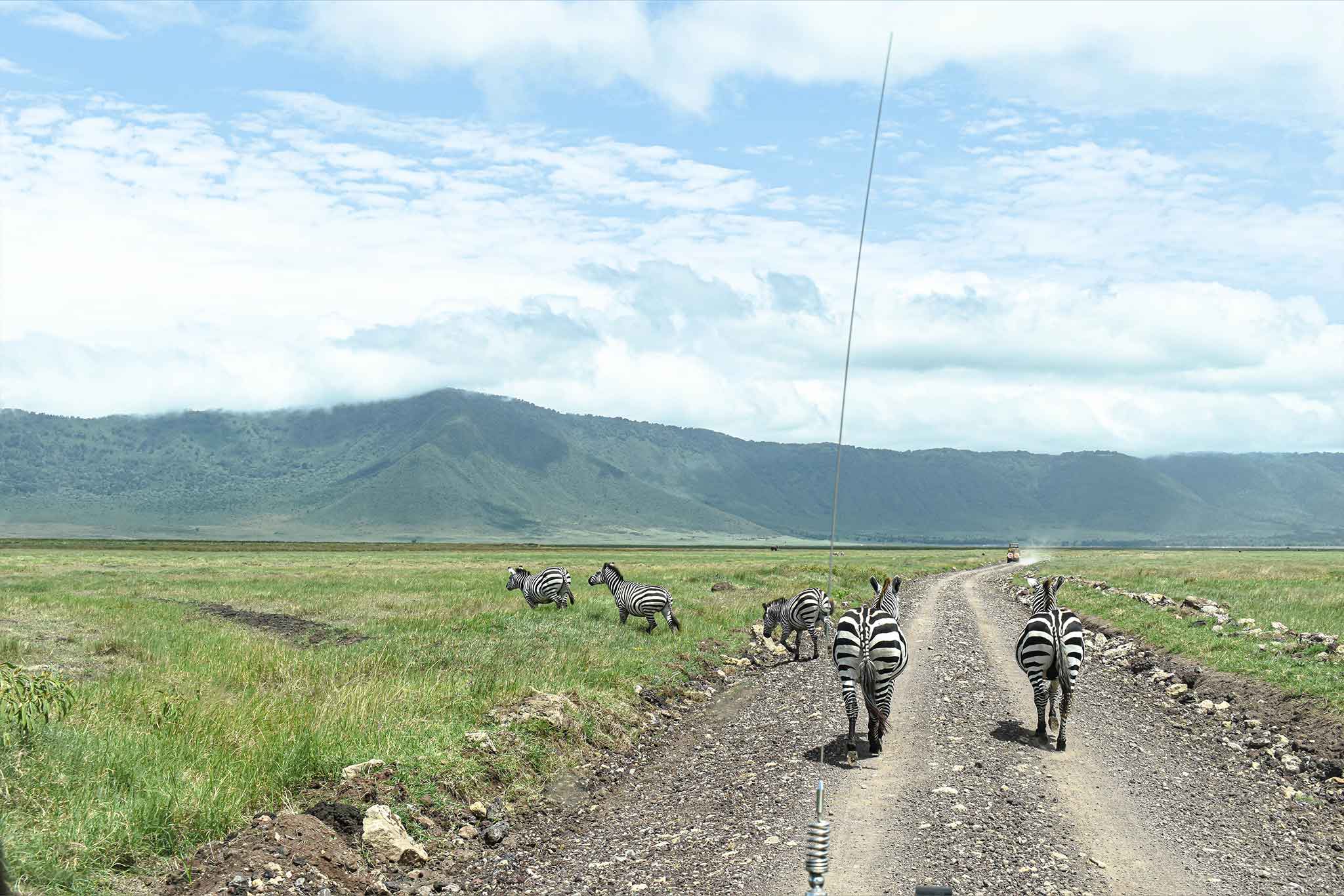
Stunning 360-Degree Volcanic Caldera Views

Descending 600 meters into the world’s largest intact volcanic caldera delivers breathtaking panoramic views that make every visitor reach for their camera the moment the crater floor comes into sight.
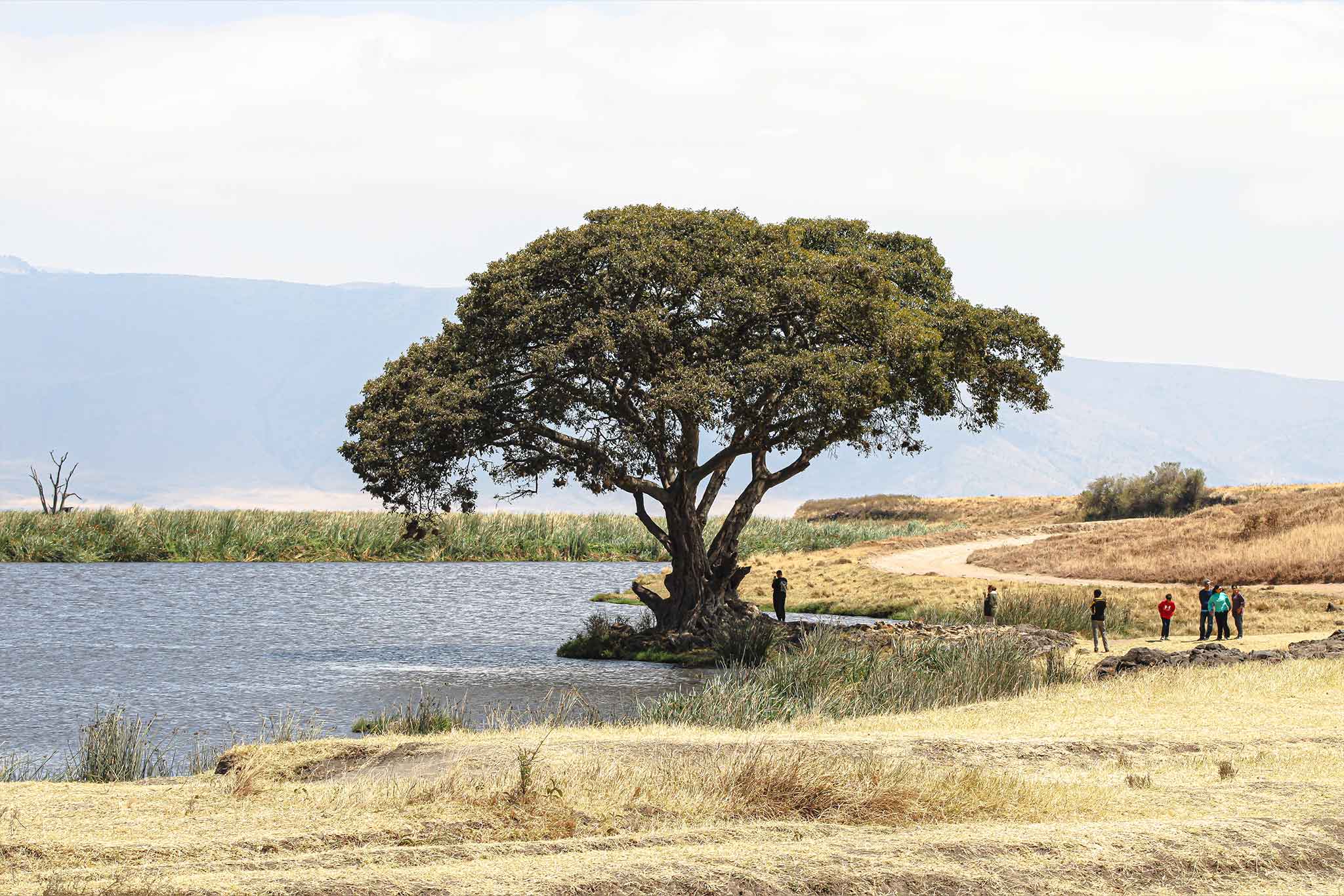
Picnic Lunch with Hippos and Birds

Enjoy a scenic picnic beside the Ngoitoktok Springs hippo pool, surrounded by hundreds of hippos, colorful water birds, and the occasional curious elephant – a truly unforgettable lunch spot in the heart of the crater.
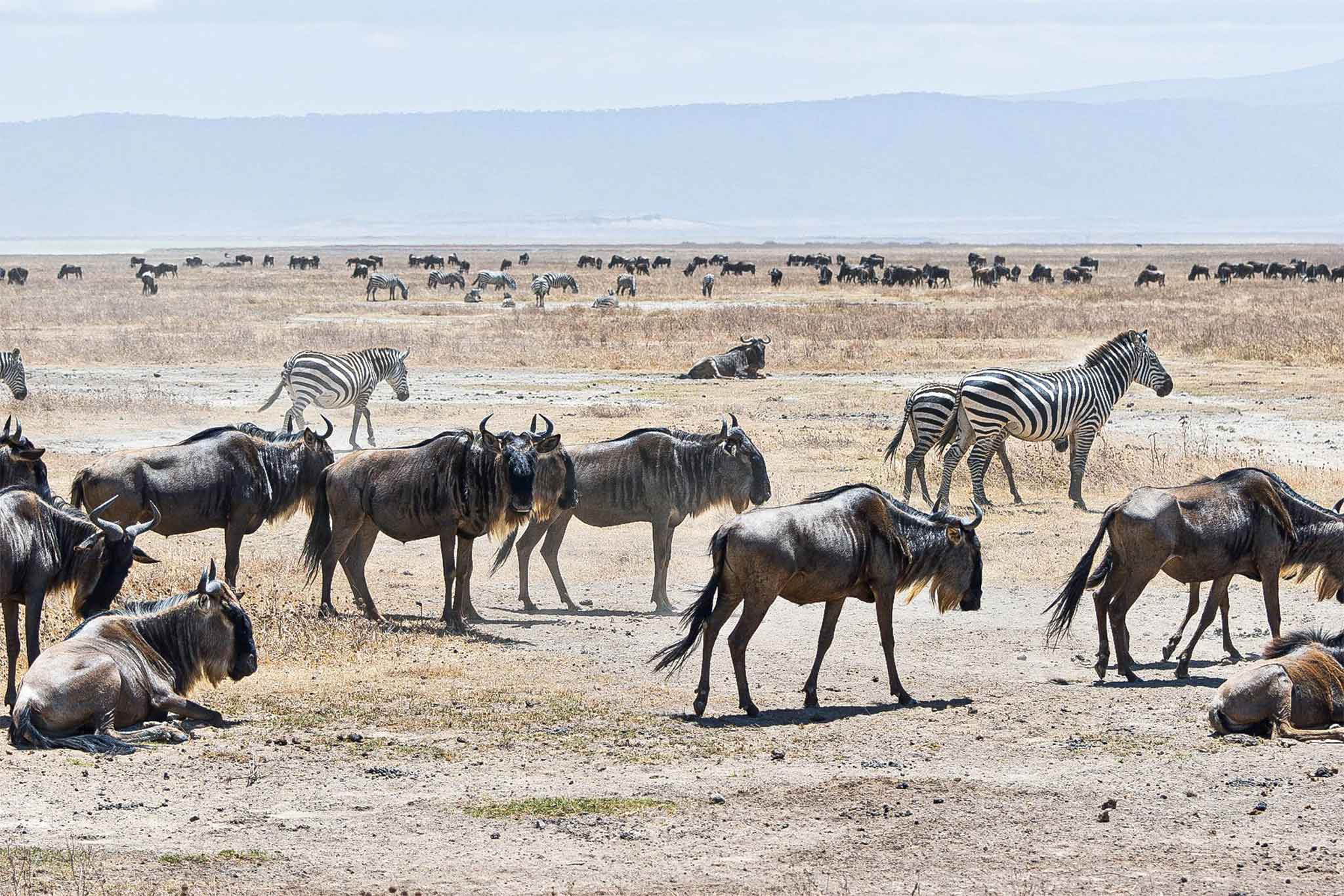
Year-Round Wildlife Spectacle

Unlike migratory parks, Ngorongoro Crater offers outstanding game viewing 365 days a year, with resident herds of wildebeest, zebra, and gazelle ensuring action-packed sightings no matter when you visit.
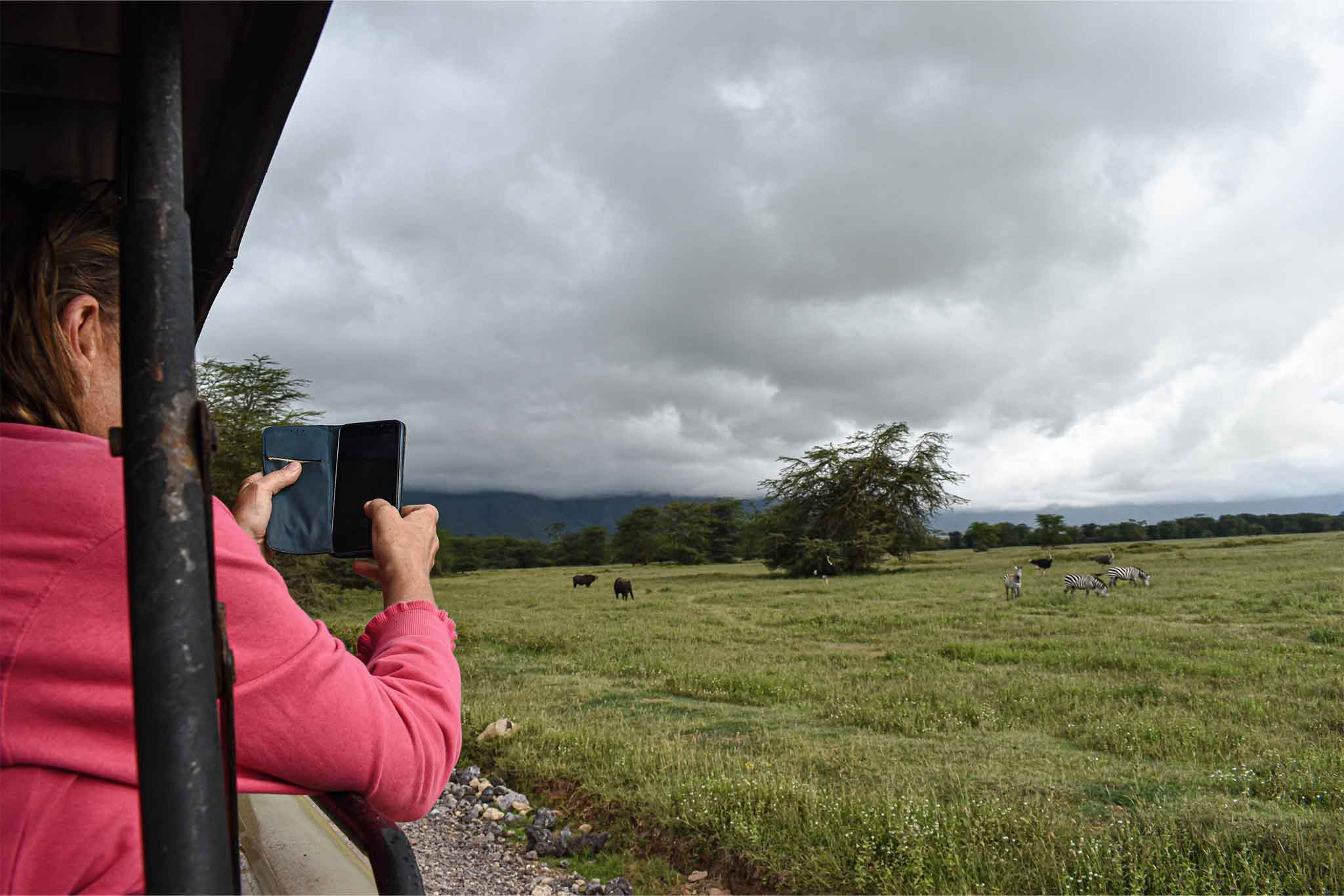
UNESCO World Heritage Site Experience

Explore one of Africa’s seven natural wonders and a designated UNESCO World Heritage Site, combining extraordinary wildlife viewing with a landscape of global geological and cultural significance.

  • Day 1
Day 1

Africa’s highest large-mammal concentration

Hotel Collection & Crater Rim Drive Your private 4×4 collects you from any Arusha-area hotel. The scenic drive climbs through coffee plantations and cloud forest to the Ngorongoro Conservation Area gate. Continue along the crater rim with jaw-dropping first views into the 260 km² caldera floor.

Crater Descent – Welcome to Eden Descend the steep 600 m rim road into the world’s largest unbroken caldera. Begin game drives across open grasslands dotted with fever-tree forests and freshwater springs.

Lerai Forest & Black Rhino Territory Explore the yellow-barked Lerai Forest where black rhinos graze openly – Tanzania’s most reliable rhino sightings. Tusker elephants stride through the trees while black-maned crater lions patrol the edges.

Lake Magadi & Flamingo Shore Drive to the soda lake that flashes pink with lesser flamingos. Hippos wallow in freshwater pools while golden jackals trot the shoreline. Serval cats ghost through tall grass hunting rodents.

Gorigor Swamp & Buffalo Super-Herds Cross the swamp where Cape buffalo herds of 2,000+ animals create moving walls of horns. Lion prides specialise in hunting these giants – dramatic predator action guaranteed.

Private Crater-Floor Picnic Lunch Spread a shaded picnic blanket at a designated site with 360° views of the caldera walls. Enjoy fresh salads, grilled chicken, tropical fruits and chilled juices while hyenas circle at a safe distance and elephants drink nearby.

Afternoon Game Drive – Big Tusker & Golden Jackal Action Search for the famous “big tusker” elephants with ivory touching the ground. Track lion prides resting under acacia trees and cheetah on open plains. End with golden-hour photography as the crater walls glow rose-gold.

Crater Ascent & Return Ascend the rim road with final panoramic views before returning to your Arusha hotel relaxed and full of stories.

More about Ngorongoro Conservation Area

Ngorongoro Conservation Area, a UNESCO World Heritage Site spanning 8,292 km² in Tanzania's Northern Circuit, stands as a living laboratory of nature and human evolution just 180 km west of Arusha. This multi-use protected zone harmonizes wildlife, Maasai pastoralism, and archaeology, with the iconic 260 km² Ngorongoro Crater—a 600 m-deep volcanic caldera—as its centerpiece. Beyond the crater, the vast highlands encompass Olmoti and Empakaai craters, the Gol Mountains, and Olduvai Gorge, offering diverse Tanzania safaris from high-altitude forests to arid plains, ideal for cultural tours and paleoanthropological insights. Vegetation across Ngorongoro varies dramatically: the crater floor hosts short-grass savannah with fever trees and yellow-barked acacias around soda Lake Magadi, while crater rims (2,200–3,600 m) feature montane forests of croton, olive, and podocarpus draped in old man's beard lichen. Highland plateaus bloom with giant lobelias and red-hot pokers in moorlands, transitioning to open grasslands and acacia woodlands on the eastern plains toward Serengeti. Lerai Forest's groundwater thickets provide evergreen shade, creating layered habitats that support year-round biodiversity in this volcanic Eden. Weather in Ngorongoro Conservation Area follows highland patterns: the June–October dry season delivers crisp 20–25°C (68–77°F) days and near-freezing nights on the rims, concentrating wildlife in the crater. Short rains (November–December) bring misty afternoons and wildflower carpets, while the long wet season (March–May) cloaks the area in emerald with 15–22°C (59–72°F) temperatures and occasional fog—perfect for lush photography, though roads slick. January–February offers warm, dry calving-season viewing with fewer crowds. Geologically, Ngorongoro formed 2–3 million years ago when a massive volcano rivaling Kilimanjaro collapsed into its emptied magma chamber, creating the world's largest intact caldera. The active East African Rift continues to shape the area through faulting and uplift, with Olmoti's breached crater and Empakaai's soda-filled basin evidencing ongoing volcanism—fumaroles still steam in remote vents. Alkaline soils from ash deposits enrich grasslands, while rift valleys carve dramatic escarpments, fostering isolated ecosystems. Beyond the crater, attractions abound: Olmoti Crater's waterfall hike reveals Munge River cascades; Empakaai Crater's flamingo-filled lake invites rim walks with views to active Ol Doinyo Lengai volcano. The shifting sands of the Gol Mountains—dune-like ash deposits—offer surreal landscapes, while Nasera Rock provides climbing and hyrax spotting. Olduvai Gorge, the "Cradle of Mankind," preserves 1.9-million-year-old hominid footprints at Laetoli and Zinjanthropus fossils, tracing human evolution from Australopithecus to Homo habilis amid layered sedimentary strata. Maasai bomas allow cultural immersion with livestock herding and beadwork demonstrations, blending conservation with indigenous livelihoods. Wildlife density in Ngorongoro Crater is legendary—25,000 large mammals, including black rhinos, high-density lions, elephants, and the Big Five, year-round. Golden jackals, serval cats, and spotted hyenas patrol the floor, while buffalo herds and wildebeest dominate the plains. Outside, the highlands host eland, mountain reedbuck, and leopards in forests; the conservation area's vastness supports migrating herds linking to the Serengeti. Over 500 bird species enrich Ngorongoro, with crater residents like lesser flamingos carpeting Lake Magadi, ostriches striding grasslands, and Schalow's turaco in rim forests. Raptors, including augur buzzards and Verreaux's eagles, soar the caldera walls. Migratory Palearctic species arrive from  November–April, with white storks, Abdim's storks, and European rollers joining resident flocks, turning wetlands into a seasonal birding spectacle in this evolutionary hotspot.
Best Lake Manyara day trip from Arusha 2026–2027 | Private full-day game drives in Tanzania’s tree-climbing lion hotspot | Year-round departures

There are no comments yet.

More about this tour

Location Overview

This unforgettable full-day adventure descends into the Ngorongoro Crater (260 km² floor), the world’s largest intact and unfilled volcanic caldera and a UNESCO World Heritage Site. Located 180 km west of Arusha (1,400 m / 4,600 ft elevation), the crater lies within the 8,300 km² Ngorongoro Conservation Area – the only place on Earth where Maasai pastoralists legally coexist with wildlife. A 600 m-deep natural amphitheatre, it supports Africa’s highest density of large mammals year-round, earning the nickname “Eden of Africa”.

Ngorongoro Crater (260 km² floor): 180 km west of Arusha. A perfectly preserved volcanic bowl 19 km wide, formed 2–3 million years ago. Permanent freshwater springs and lakes sustain 25,000+ large animals, including the Big Five, critically endangered black rhinos (easiest sightings in Tanzania), black-maned lions, tusker elephants, and massive Cape buffalo herds. Soda Lake Magadi flashes pink with flamingos while golden jackals and serval cats patrol the grasslands.

Lerai Forest & Gorigor Swamp: Yellow-barked fever-tree forest on the crater floor – prime black-rhino habitat. Gorigor Swamp hosts super-herds of buffalo and resident hippo pods.

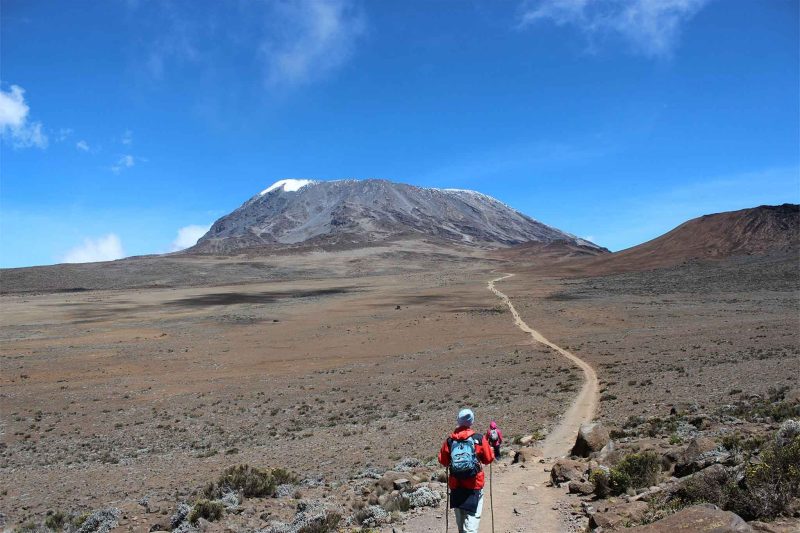
Crater Rim (2,300–2,400 m): Highland forests cloaked in mist, home to Maasai bomas and panoramic viewpoints over the caldera. On clear days Mount Kilimanjaro and the Great Rift Valley are visible in the distance.

Geography & Access Terrain: Short-grass plains, acacia woodlands, soda lakes, fever-tree forests, freshwater swamps, and highland crater rim. Altitude Range: Crater floor 1,700–1,800 m (5,580–5,900 ft); rim 2,300–2,400 m (7,550–7,870 ft). Travel Times (from Arusha): 3–3.5 hours to crater rim; 20-minute descent road to floor. Gateway: Kilimanjaro International Airport (JRO) → Arusha (45 min private transfer). Year-round access via private pop-up roof 4×4; dry season (June–October) concentrates wildlife around permanent water for dust-free Big Five photography, while green season (January–March) turns the floor emerald, brings newborn calves, dramatic storms, and 20–30 % fewer vehicles.
Share on social networks
Destinations
Cities
Our Newsletter

Subscribe to our newsletter and get exlusive first minute offers straight into your inbox.

    Destinations
    Cities
    Our Newsletter

    Subscribe to our newsletter and get exlusive first minute offers straight into your inbox.

      Visit us on Social Networks

      https://thewovenexperience.com/wp-content/uploads/2018/08/Travelicious-logo-footer.png

      Visit us on Social Networks

      Close

      Ngorongoro Crater Day Trip – The Woven Experience

      Price
      $490 per person
      Duration
      1 Day
      Destination
      Ngorongoro Conservation Area
      Travellers
      1+

        Preferred Currency:

        1. Who are you travelling with? *

        2. When do you want to travel? *

        3. Accommodation preference? *

        4. Proffered communication list? *


        Travellers


        Anything else you'd like to share?

        Your contact details


        I give permission to receive a travel proposal and related information.
        Would you like to know about our volunteering packages?

        Discount code (if any)

          Enquiry about the Tour availability or anything you’d like to know. Required fields are marked *